

 Encomium
Lagos State Governor, Mr. Babajide Olusola Sanwo-Olu, has called for a new financing model driven by stronger partnerships between governments, the private sector and development institutions to bridge Africa’s development gap.
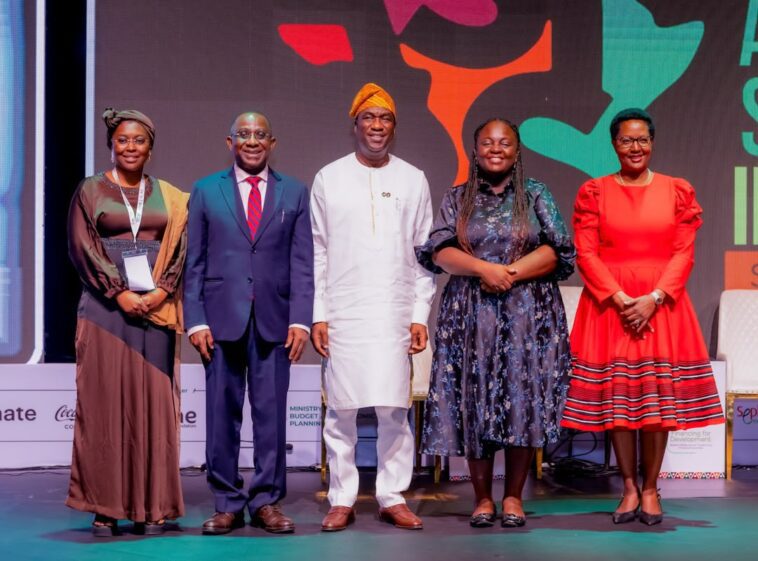
The Governor made this call on Wednesday at the Opening of the Y2026 Africa Social Impact Summit (Asis), themed “Financing for Development: Building Resilience and Transforming Emerging Economies,” held at Eko Convention Center, Eko Hotel and Suites, Victoria Island, Lagos State.
Sanwo-Olu, who was represented by the Deputy Governor, Dr. Kadri Obafemi Hamzat, noted that Africa already understands the investments required to drive sustainable development in critical sectors such as infrastructure, healthcare, education, agriculture, clean energy, technology, housing and climate resilience, adding that the continent’s future depends not on the challenges it faces but on its ability to mobilise investment at the scale and speed the continent requires.
His words, “Around the world, the greatest progress is taking place where governments work hand in hand with the private sector, development finance institutions, philanthropic organisations, multilateral agencies, and impact investors to solve complex problems. Africa’s future will not be determined by the challenges we face but by the courage of our response, the strength of our partnerships, and the investments we make today. No single institution can finance Africa’s future. But together, we can.”
Speaking further, the Governor stated that the greatest development gains are achieved when governments collaborate with the private sector, development finance institutions and impact investors.
Sanwo-Olu noted that Africa’s annual financing gap for the Sustainable Development Goals (SDGs) runs into hundreds of billions of dollars, stressing that the scale of the challenge requires a collective approach beyond government budgets.
He therefore, emphasised the need to deepen domestic capital markets, mobilise private investment, leverage development finance and create the regulatory certainty required to attract long-term investments that can accelerate sustainable development across the continent.
Speaking further, Sanwo-Olu stated that the transition to a green economy presents enormous opportunities for Africa to generate jobs, stimulate innovation, attract investment and build competitive, sustainable economies, urging stakeholders to leverage investments in renewable energy, sustainable transportation, climate-smart agriculture, waste recycling, the circular economy and resilient infrastructure to drive long-term growth.
He revealed that Millions of Africans, particularly women, young entrepreneurs, and small businesses, still face significant barriers in accessing affordable finance. When development finance is mobilized effectively, economies grow faster, businesses gain access to affordable capital, infrastructure improves, and more people are lifted out of poverty. It enables governments to deliver essential services more efficiently while encouraging innovation from the private sector.
The Governor further stated that his administration had consistently pursued partnerships that have enabled the delivery of critical projects in transportation, healthcare, education, climate resilience and digital innovation—areas that would have been difficult to fund through public resources alone.
He added that the state government understands that resilience goes beyond responding to crises to preparing for the future through climate-resilient infrastructure, an economy that creates decent jobs, support for innovative businesses, investment in young people and development that reaches every community.
In his address, Chairman, Africa Social Impact Network, Prof. Oyebanji Oyeyinka stated that the summit has called for urgent action to accelerate Africa’s economic transformation through sustainable financing, industrialisation, and resilient development systems.
Prof. Oyeyinka noted that with Africa’s working-age population projected to increase by more than 620 million people in the coming decades, the continent must adopt a new development model that creates jobs, reduces poverty, and strengthens economic self-reliance.
He highlighted that structural transformation—from dependence on raw commodity exports to value-added manufacturing and innovation—is essential for inclusive growth and long-term prosperity, while urging African nations to mobilise domestic resources, strengthen governance, and move beyond rhetoric to decisive action.
In her welcome address, Chief Executive Officer (CEO), Sterling One Foundation, Mrs. Olapeju Ibekwe stated that the Africa Social Impact Summit (ASIS) has evolved into a major platform for driving investment, partnerships and policy solutions for Africa’s development, having attracted over $1 billion in investment into scalable solutions across the continent.
She said the five-year journey of the summit has demonstrated the power of collaboration, noting that the platform was established to catalyse multi-sector partnerships, attract impact investment and advocate policies capable of delivering sustainable development.
Commending the Lagos State Government for its continued support and partnership in hosting the summit, Ibekwe described ASIS as more than an event but an implementation platform driving change across Nigeria and Africa, adding that it reflects the urgent need for Africa to develop sustainable financing models that can support industrialisation, infrastructure, innovation and inclusive growth.