
 Encomium
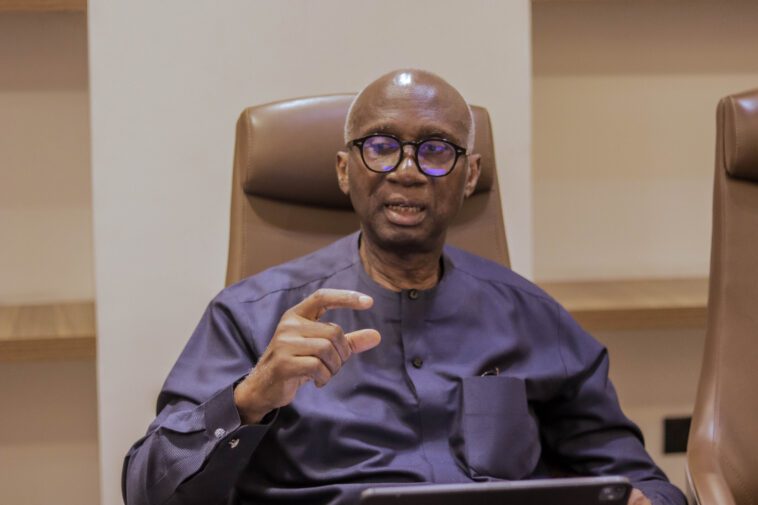
The development of Nigeria’s telecommunications industry faced major regulatory and infrastructure hurdles before the GSM revolution of 2001. Chairman of MTN Nigeria and former Executive Vice Chairman of the Nigerian Communications Commission (NCC), Dr. Ernest Ndukwe, recalled the challenges in a recent interview. He said the first major hurdle was spectrum, describing it as critical to building a functional mobile network. “Without frequency, it is impossible to build a mobile or wireless network.”
At the time, spectrum had been allocated in uneven portions, with some operators holding 5MHz, 7.5MHz or 10MHz. Ndukwe said regulators had to recover the scattered allocations and establish a fair system for the new market. “It was determined that for fair competition at the start of the new telecom market we were trying to birth, all operators needed to have the same size of spectrum through a transparent licensing process.” He recalled that the process was difficult, with some companies taking the authorities to court, but regulators eventually recovered enough spectrum in the 900MHz and 1800MHz bands for the new services.
Infrastructure was the second major challenge. Ndukwe said Nigeria had an inadequate telecommunications network for its population, making rapid expansion necessary. “Nigeria was severely short of telecommunications infrastructure, which made it necessary to quickly commence a licensing process capable of attracting the right private companies to build out the network.” At the time, the country had about 400,000 fixed lines and 20,000 analogue mobile lines for a population of about 120 million.
The scale of the infrastructure gap meant the new operators had to expand networks rapidly. Ndukwe said the existing infrastructure provided by NITEL was grossly inadequate making private investment essential to increasing access to telecommunications services. The licensing process therefore had to attract companies capable of investing heavily in network infrastructure while operating within a credible regulatory framework.
Beyond the initial rollout, Ndukwe said maintaining telecommunications infrastructure remains a challenge, particularly because of power, security and right-of-way issues. “The biggest challenge has been how to run the infrastructure on ground amid security, power, right of way challenges,” he said. Power costs alone have remained a significant burden for operators, while fibre cuts, road construction and security concerns can make network maintenance more difficult.
Reflecting on the transformation that followed the first GSM rollout, Ndukwe said the achievement demonstrated what could be accomplished when regulatory reform and private investment worked hand in hand. Recalling the first official GSM call in August 2001, he described the moment as a dream come true. “We could immediately see the happiness of the Nigerian public as telecommunications services became easily and widely available. For me and the other members of the Commission at the time, it was a dream come true, and it showed that Nigeria could hold its head high among the comity of nations.” Twenty-five years on, he said the industry’s progress remains tied to the institutional and infrastructure foundations established during its formative years.