

 Encomium
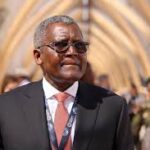
Unanticipated challenges and distressing delays in birthing the refinery and petrochemical company in the last five years fast tracked the greying of Alhaji Aliko Dangote, 67.
Africa’s richest man jokingly admitted how fast his hair is now fully grey because of embarking on building the world’s largest single train refinery (at 650,000 barrels per day).
He referred to his hair as ‘cotton’ during the media parley he hosted at the refinery and petrochemical complex in Ibeju-Lekki (Lagos) on Sunday, July 14, 2024.
“I developed all my grey hair within the last 5 years,” he volunteered, linking it to the huge challenges the venture faced from the beginning.
And he maintained that if he had known how herculean the project would be, he would not have attempted it.
“If I am given the opportunity to start again, knowing what I know now, I won’t take it.“
From the time the facilities were granted by a consortium of banks in September 2013 till the company was ready to roll, the challenges appeared insurmountable.
First, the arrangement to locate the refinery in Ogun State couldn’t be sorted in three and half years—and he had to look elsewhere.
Then the next site in Lagos was riddled with political issues which took over a year to resolve with the community. And when they eventually checked the land, it was swampy. The converting the swampy land to solid ground was as expensive as it was time consuming.
Swamp buggies were brought in to remove trees and obstacles. And with over 70 percent of the land to be sand filled (they brought four of the biggest dredges in the world to site to dredge 65 tonnes of sand), the reality was testing. And once sand filling was done, they were told that they had to wait a year for the sand to settle. And the mogul didn’t have that luxury of time. He asked for options. A Chinese company was recommended and hired to do the dynamic compaction.
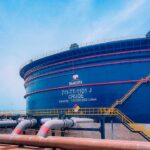
The expansive site of 2,635 hectares (which has 30 kilometres fence) was difficult to convert and restructure.
Another challenge cropped up when they realised that the equipment acquired to set up the refinery (some as heavy as 3,000 tonnes) needed a port to be evacuated – and no port in Nigeria could handle that. And had to build one.
Now, they decided that a special road that can easily cope with the heavy equipment needed to be built – and they built one.
They soon found out that they needed to run 125 kilometres of pipelines into the sea to handle discharge of crude (around 2 million barrels of crude a day).
Later came the soil test which showed that they had to do piling (249,000 piles).
The hurdle of getting supply of sand, gravel and cement was next. Cement wasn’t a problem because of Dangote Cement. But they had to build a quarry to crush 800,000 tonnes per month (which is now the biggest quarry in the world).
The magnate conceded that if he had adopted a project financing mode by international banks, the project would have long been terminated because they would ask for an arm and leg.
But because the money for the refinery was borrowed ($5.5 billion) based on the group’s balance sheet and naira was strong then, they survived. They could cope with the delay over the span of 5 years (because of lack of land, sand filling…) and the project could go on (with $2.4 billion of the loan repaid and $2.7 billion still outstanding).
“It is not a tea party,” he confesses. “We have paid our dues, we have suffered. It’s not easy.“
At the beginning of the project, the exchange rate was N156/$1. And 80 percent of the revenue is from Nigeria.
“We are sweating every day and trying to survive.”