
 Encomium
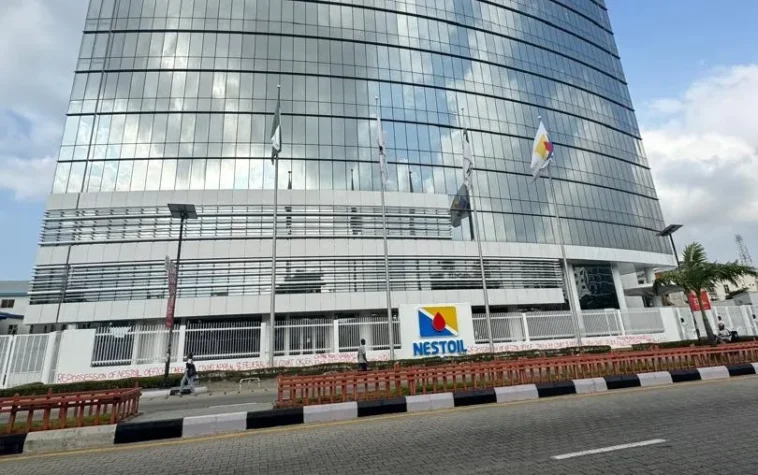
The Nigerian banking sector is facing a critical stability test as a $2 billion (approx. ₦2.9 trillion) distressed loan from indigenous energy giant Nestoil Limited forces a historic “balance sheet reset” and lack of dividend payments.
The latest banks hit by bad debts from Nestoil are United Bank of Africa (UBA) and Access Bank, who did not declare dividends for shareholders in their 2025 Full Year financials.
UBA’s full year 2025 results showed loan loss provisions of N331 billion on its books, while Access Holdings’ charge for impairment on loans and advances to customers jumped 209% to ₦287.3 billion.
Available data show that Nigerian banks’ exposure to oil and gas at the end of 2024 was N21 trillion, with the major banks exposed to Nestoil being United Bank for Africa (UBA) Plc, First Bank of Nigeria (FBN), Access Bank Plc, FCMB Group, Union Bank, Ecobank and Afrexim Bank.
Under the “orthodox” and stringent leadership of CBN Governor Olayemi Cardoso, the regulator has prohibited affected banks from paying dividends for the 2025 financial year until they fully provision for these non-performing loans (NPLs).
This “no-mercy” approach has already resulted in a ₦2.16 trillion impairment charge across five tier-one and tier-two lenders—including Access, UBA, Ecobank, First HoldCo and FCMB—according to available data from their 2025 financial statements.
These charges directly reduced the banks’ net income for the fiscal year preventing them from distributing expected dividends to shareholders.
The Debt Landscape: Nestoil
The current bank loan crisis centres on Nestoil’s inability to service syndicated loans, which were facilitated during periods of higher oil production expectations. Nestoil is a large-scale indigenous operator.
Nestoil’s inability to meet obligations has added to systemic banking pressure, particularly affecting lenders with high exposure to the independent oil and gas segment.
Apart from bad loan provisioning, the banks are also fighting to recover the debts owed to them.
Lenders secured a Mareva injunction in October 2025 freezing Nestoil assets—including bank funds, properties, and cargoes—across 20 plus institutions. Receivership efforts have continued despite legal pushback from Nestoil.
Banks are now moving to seize real estate, movable assets, and oil cargoes, which may lead to prolonged legal disputes that lock up vital capital, thereby threatening industry liquidity.
Affected banks book huge provisions, dividend payouts frozen
FCMB
FCMB Group Plc adopted a defensive stance on its balance sheet in 2025, allowing its loan book to contract marginally as the bank grappled with a sharp rise in credit defaults.
The retreat in lending coincided with a significant hit to asset quality, with net impairment losses on loans doubling to ₦92.5 billion, from ₦43.7 billion the previous year. FCMB has not announced a dividend for the 2025 Full year.
FirstHoldCo Plc
FirstHoldCo Plc (the parent of First Bank) was disproportionately exposed to delinquent loans within the troubled oil and gas sector, leaving it vulnerable to global commodity price shocks. In 2025 First HoldCo per its unaudited financials took a ₦748 billion impairment charge on its loan book, a direct response to the CBN’s demand that banks stop “hiding” bad loans under the guise of forbearance. By taking the hit now, First HoldCo avoided the “death by a thousand cuts” that comes from multi-year incremental provisioning. *First HoldCo would likely not pay a dividend for 2025 as is the case with some lenders who recently released their audited accounts.*
United Bank for Africa (UBA)
United Bank for Africa (UBA) Plc’s audited FY 2025 results revealed a significant ₦331 billion loan loss provision.
UBA Group Profit Before Tax came in at ₦423.4 billion down 47% from ₦803.7 billion in 2024. UBA is not paying a dividend for Full Year 2025.
Ecobank Group
Ecobank Group recorded massive Net Impairment losses on loans of N707.52 billion in its 2025 FY audited results, which its auditors flagged as a key audit matter.
Access Holdings
Access Holdings Plc’s bad-loan impairments more than doubled in Full Year 2025 and total comprehensive income plunged 58%, prompting the group to skip its dividend payout.
Impairment charge for impairment on loans and advances to customers jumped 209% to ₦287.3 billion.
Systemic Risks Mount
Experts however are warning that recovery for the banks may be elusive. The CBN’s stance now prioritizes capital retention for the banks, suspending dividends until non-performing loans (NPLs) fall below 5%—a shift from prior forbearance.
Banking sector NPLs also neared the 7% level in 2025, threatening bank stability if oil loan woes persist. The situation highlights the risks associated with highly leveraged, asset-backed project financing in the volatile oil and gas sector.
Strategic Outlook: Rebuilding Sector Stability
While the dividend suspension is painful for investors, financial analysts argue that Cardoso’s “Big Bang” provisioning is necessary to prevent a 2009-style banking collapse.
By forcing banks to take the hit now, the CBN is ensuring that the ₦21 trillion total exposure (2024) to the oil sector is accurately reflected, rather than hidden under “forbearance.”
This oil related stress on the Nigerian banking sector is coming amid the end of the Banking Recapitalization exercise, which has helped banks that just raised new capital to absorb these write-offs.